Forest Sunday is the first Sunday in September of Year A
- Genesis 2:4b–22 ‘Born of Earth and the Spirit’
- Psalm 139:13–16 ‘Born from the womb of Earth’
- Acts 17:22–28 ‘Born to search for God’
- John 3:1–16 ‘Born of water and the Spirit’
‘Trees and Cities: the ancient and modern challenge’
SERMON for St Pauls Beaconsfield, September 3rd, 2023
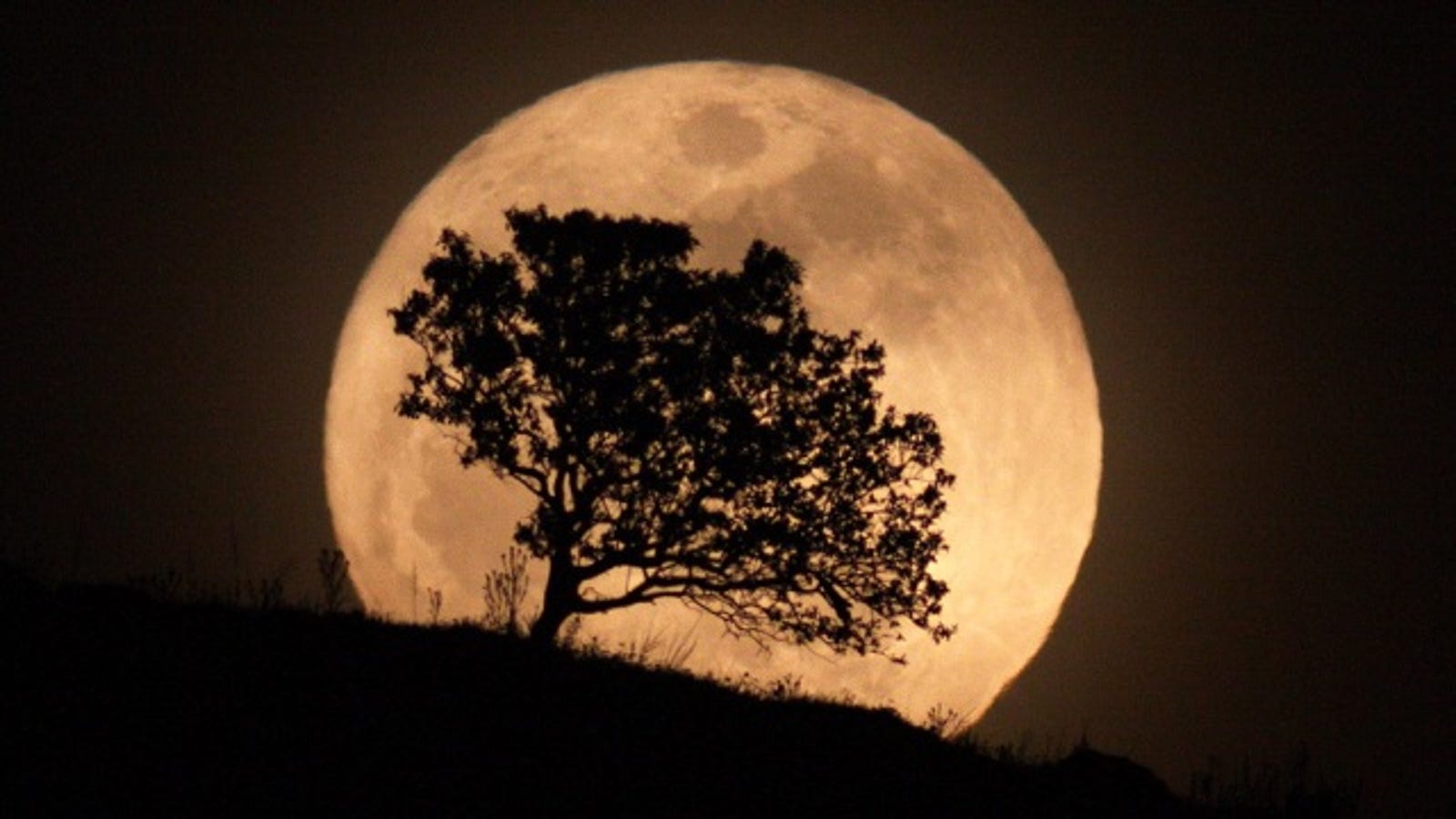
I see the bad moon a-risin’
I see trouble on the way
I see earthquakes and lightnin’
I see bad times today
Don’t go around tonight
Well it’s bound to take your life
There’s a bad moon on the rise
I hear hurricanes a-blowin’
I know the end is comin’ soon
I fear rivers over flowin’
I hear the voice of rage and ruin
Don’t go around tonight
Well it’s bound to take your life
There’s a bad moon on the rise, alright
Hope you got your things together
Hope you are quite prepared to die
Looks like we’re in for nasty weather
One eye is taken for an eye
Well don’t go around tonight
Well it’s bound to take your life
There’s a bad moon on the rise
Don’t come around tonight
Well it’s bound to take your life
There’s a bad moon on the rise
Creedence Clear Water Revival. 1969
I saw this song being played on ABC Rage last week and wondered about what they would have thought about us celebrating Sustainable September in 2023. A few of us here would remember those times in the 1960’s as they were highly apocalyptic, and this song became the anthem of many groups, including soldiers in Vietnam but also a new group of people who were called environmental activists. There was a strong sense that our future was very clouded.
Environmental issues were just getting underway as Silent Spring had been released in 1963 showing how bird life was dying everywhere and all of us now had DDT and other chemicals in our tissues. Then in 1970 the first Earth Day was celebrated and a young student at UWA, recently married to an anti-Vietnam activist, thought that this would be something he needed to put his life into.
Two years later Jan and I were in Creedence’s California where so much of the environmental activism was focussed and we began that journey to try and understand what we could do. The apocalyptic feeling was especially strong as San Francisco collapsed as the first oil crisis happened in 1973.
Soon after, in 1974, we arrived in Fremantle as a new family at St Pauls, and I was part of the new Murdoch University, teaching Environmental Science and becoming part of the various environmental issues, locally and globally, that we needed to address. The need to save our forests was high on the agenda by students at Murdoch.
These environmental issues are of course highly political as well as being about science, technology and government policies. But it has also been very clear that such issues are deeper than this, they are spiritual. St Pauls has constantly reminded us of that in the past 5 decades that we have been coming here.
The most important insight for me has been to see the message of the ancient texts of the Bible, that show us about God’s wonderful creation and our part in managing it, but the result over many epochs of history has been very mixed. And on Forest Sunday, I want to show you how the Bible has always linked trees to our spiritual status in our cities.
The first lesson in Genesis 2: 4-22, the second creation song, is in fact rather similar to the geological epochs that eventually went from darkness and chaos to water and life and trees, in a garden, with human beings tending this. We now know the earth was created over 4 billion years ago and recognisable humans did live in a Garden, during long epochs probably over the last 2 million years, as hunter-gatherers, hardly changing their environments but surviving. Then they left this kind of life and began to make food from farms and to live in cities about 10,000 years ago.
Why did they live is a question for science and its also addressed in the Bible.
In the Garden was a Tree of Life and a Tree of the Knowledge of Good and Evil that we must not touch. But we did, and our curiosity led to us being banished forever from the Garden of Eden to toil in the fields creating agriculture and to live in cities. Knowledge became a two-edged sword.
The history of human beings from 8 to 10,000 years ago is still being pieced together but there are ancient tribes like our Australian indigenous people who put their knowledge into songs. The ancient songs that were written down in our bible were trying to make sense of this transition in the region where cities and agriculture began. This song in Genesis 2 suggests that from here on every society that shifts to live with agriculture and cities does not go back to the garden, the door is locked. This appears to be our journey as humans and it helps us understand the conflict between trees and cities that is the theme of the first Sunday in Sustainable September.
The prophets tell many stories of apocalyptic epochs, sounding very like Creedence. They tell stories of cities and trees that cover ancient history, through to the 21st century, that is as the 2nd lesson suggests ‘cover the times of their existence (the epochs of their history, in NEB)’ (Acts 17:26).
Most of these epochs of history detailed in the old testament end in the collapse of cities. And the prophets could see this link between collapsing cities and the cutting down of trees. Prophets spoke to the people in cities and said that if they treated the poor and the hungry like they treated trees, without any concerns for their welfare, then they would be under judgement. Trees and forests were the symbol of our spiritual condition in our cities. If we overcut forests we surely had lost our spiritual direction and values. A city exhibiting injustice, self-centred lifestyles and violence, would collapse and die, according to the prophets, and the trees would die with them. If you want to save forests you fix the city that exploits them.
This was in fact what happened over and over in the epochs of history. Babylon was the great city of the ancient world and is constantly seen, in all parts of the Bible, as the symbol of all cities that lose their way and destroy their trees. Babylon with its famous hanging gardens was on the Tigris River but it was greatly feared due to its violence and it was constantly at war. Babylon collapsed because the Tigris River changed its course and the city had no water. How? Because the river silted up after too many trees were cut down from the surrounding hills and the river went hundreds of kilometers away.
Isaiah predicted this collapse. He is furious with Babylon, the city of fear and violence, in chapter 14 and predicts its future collapse and then he says, after it has collapsed:
‘The whole world is at rest and is at peace,
Isaiah 14:7-8
It breaks into cries of joy.
The Pines themselves and the Cedars of Lebanon exult over you.
Since you have been laid low, no man comes up to fell us.’
Babylon was abandoned in 1000 AD.
But its not inevitable, according to the prophets. There is another city type, the opposite of Babylon, it was called Zion which was a city of hope, justice and right living. Thus, it enables the city to work well, in fact it is a city which is in intimate friendship with its environment and especially its adjacent forests.
Isaiah says to Zion:
‘You shall go out with joy and be led in peace,
Isaiah 55:12
Before you the mountains and hills shall break into cries of joy
And all the trees shall clap their hands’.
The same ideas are taken throughout the old and new testaments, right up to the book of Revelation where two cities are described as our alternative futures in chapters 18 and 21. This is written around the time that the Roman empire was collapsing.
Babylon is presented in chapter 18 as a city of frivolous consumption and war machines that consumes the lives of men and is doomed to collapse never to be seen again.
But Zion is a new kind of city, ‘for the old order has passed away’ and the new city is made from jewels that each represent the legacy of good people, building the structures of the city. And through the city runs the River of Life and the Tree of Life, restored from the Garden.
Some beautiful images but the message I feel is simply showing what the prophets said for several thousands of years: human settlements need to be at peace within themselves and within nature, especially with trees.
Trees are seen as the symbol of that healthy relationship between people and God.
What about us? How does it relate to us here in Perth? I have a good story to tell you about how our city saved a forest.
Our history of settlement has been to cut the forests, to create agriculture and sell tree products. From early days there were people who hated to see the trees being cut but we lost two thirds of them. There was an amazing process begun in the 1970’s in Perth that reached fruition in 2001 when the WA Government stopped the logging of old growth forests and it began in the city. It was a first for any Australian city to stop old growth logging and indeed probably anywhere. In 2024 the WA Government will complete this transition by stopping all logging in native forests not just old growth. How did this happen?
It was a very strong bottom-up, community-led process that focused on the companies, wealthy people and politicians in the city. The ancient Jarrah and Karri were hundreds of years old but had been logged for 150 years, some of them the tallest trees in the world, and now logging was increasing as the trees were being sold not just for timber but for woodchips, to make paper. As these forests were right on our door-stop Perth people started to get concerned that we were destroying these magnificent cathedral-like trees.
There was an incredible cultural change in the 1990’s led by a small group of forest activists, some of them young students that I taught, who began to dramatize the issues and act like prophets. They were very creative, using direct action in the forest for the first time in Australia and there are people in St Pauls over the years who were part of that, like Basil Schurr from Denmark who used to quietly visit us. Perhaps the biggest tool the modern day prophets started to use was the media and a very clever way of reaching our culture: convincing well-known people to come out and say they supported the campaign to ‘stop logging in the old forests’. The key person they found and delivered to the media was the Eagles’ coach Mick Malthouse who gave a powerful media interview in the forest and said surely these trees should not be turned into woodchips. It was a turning point.
He was followed by a fashion leader Liz Davenport and the artist Guy Grey Smith who all stood up to be counted as ‘saving the forest’. It suddenly became acceptable to come out and join them so the new young leader of the ALP, Geoff Gallop, took the idea to the ALP conference and, despite logging companies and workers lobbying, it was decided to take it to an election. In 2001 Geoff Gallop won with this moral issue as the main difference between the parties. Surveys showed that virtually all ALP voters and nearly 90% of Liberal voters wanted to stop the logging of these ancient trees. The Premier Geoff Gallop then rapidly stopped the old growth logging and created 20 national parks instead…and the trees were heard to be clapping.
The woman who mostly led this process was Beth Schultz and she wrote a beautiful article recently reflecting on this. She tells the story of how Mick Malthouse came to stand up and others to follow, often losing their jobs as a result. An academic supporter was hounded to resign but survived. Beth concludes:
‘The forests debate in WA is the best example in Australia of the evolution of the community’s conscience. This evolution began long ago. Over the decades, even while the forests were being stripped and plundered, individuals and groups recognised publicly that there is more to forests than wood and deplored the waste and destruction the European invaders have imposed on them… Our Western Australian forests epitomise the beauty, the grandeur, the diversity and the complexity of nature, ever changing, awe inspiring, appealing to the senses as well as the soul. They represent the continuity and evolution of life, an unbroken link with the beginnings of life on earth. They confirm the relative insignificance of humans – they are a humbling as well as an exhilarating experience.’
Now we have a global process to save forests and replant cleared land as part of climate change and biodiversity preservation. We have the IPCC processes following the Paris Agreement where every country signed up and each 2 years must ratchet up their commitment, including stopping land clearing. We also now have the Glasgow Declaration on Forests and Land Use in 2021 signed up by 100 countries including Australia and Brazil. The first report on whether Australia is doing what is required shows we are now planting much more than we cut for almost ten years. But for me the interesting part is to see that across the country are strong community groups watching every bit of forest like hawks. Victoria is now acting to follow WA and ban all logging in native forests.
There is of course much more to be done, its always much more messy when you are on the inside of these change processes, than this quick history would suggest. Now we have a new campaign to save the Jarrah forest from Bauxite mining and a new film Cry of the Forests sets out the issues. It builds however on some major spiritual victories and other similar ones like the Roe 8 victory which depended on a Premier taking leadership after a major grass roots campaign that resembled the forest campaign, led by Mark McGowan who witnessed this win for forests with Geoff Gallop as a young, fresh politician in 2001.
This and other issues will be our agenda in Sustainable September. The climate agenda is number one. Cities in Florida began to be taken apart this week by Hurricane Idalia and cities in Greece, Canada and Hawaii in recent weeks were burned to the ground as global boiling took its devastating hold. Everywhere forests are burning. The forests need global cooling and we need more forests to be created to help us reach that.
Can our time in history turn these issues around? Can we rebuild all the forests as ways of reducing CO2 from the atmosphere and fill our cities with trees to cool them in the increasing extremes of temperature?
A final word suggests we can believe this is possible. Zion is still our choice that needs to be taken. And the even though its getting harder and very much more messy than the pure possibilities that I tend to talk about, its possible. This is our faith.…The 3rd lesson in John 3 says that ‘we must be born again’. We have a daughter Renee, ‘born again’. It’s a beautiful idea that can be applied now as there is a new word being introduced into business, agriculture and environmental politics – it is the need to be ‘regenerative’. It suggests that it is time now for our environment to be reborn. So, ‘regenerative development’ suggests we need to go further on the environment and trees than we have been doing over the past decades. We began to stop our cutting of forests and we began to stop our pollution of the atmosphere, but that is not enough.
Now we must begin repairing or regenerating the environment. Reborning it! Regenerative agriculture and regenerative cities together can regenerate our forests across the planet, so that we begin global cooling and bringing life back to every region. This is the vision we now see emerging from the prophets of our day.
This is our hope, to regenerate our forests and our planet. We have 30 years to do it.
Professor Peter Newman
More Season of Creation liturgical resources from the Uniting Church can be found here